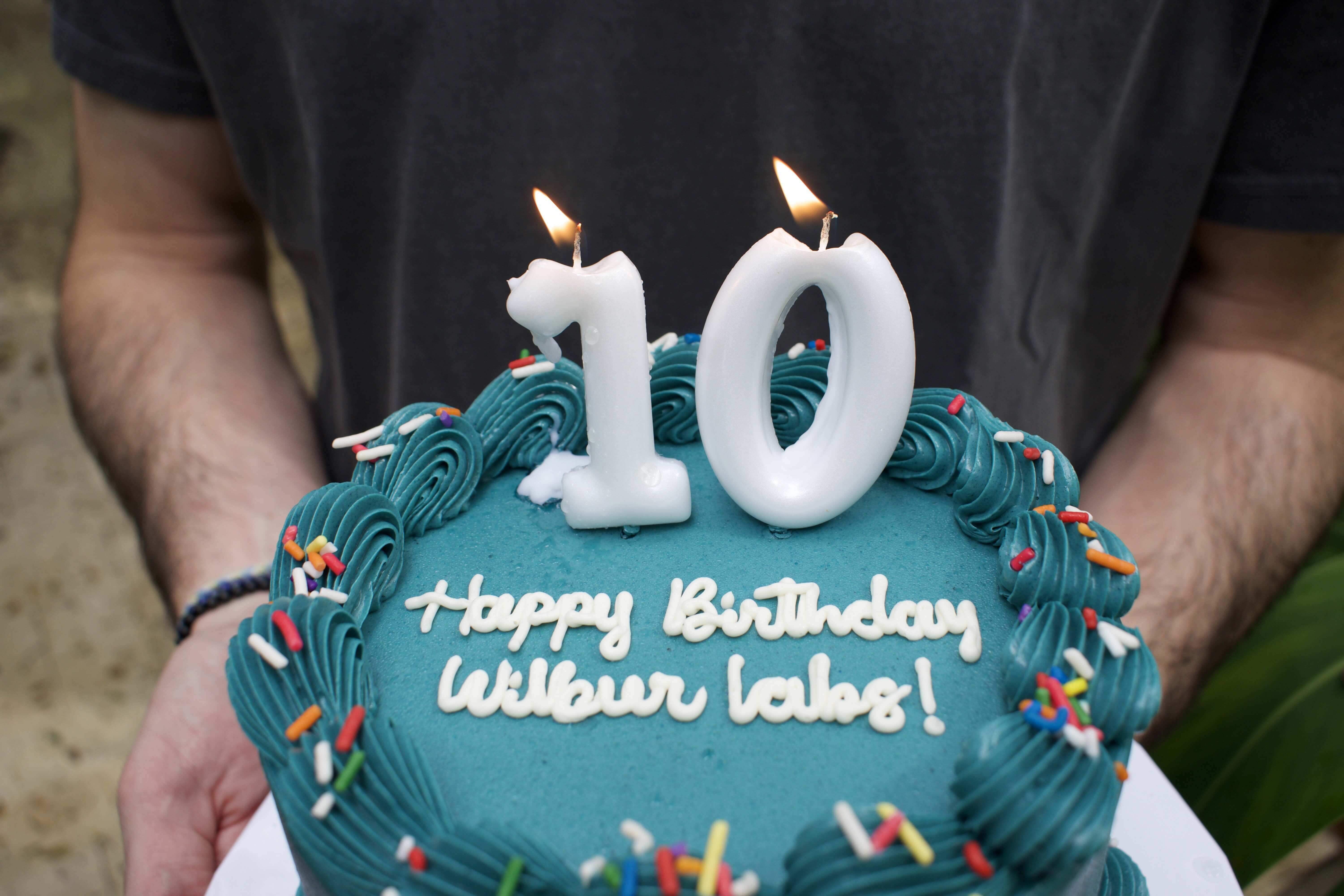
Today marks exactly ten years since we started Wilbur Labs.
Usually, we’re too focused on what’s next to spend much time looking back. But a decade is a meaningful milestone. It’s certainly long enough to see patterns. Long enough to separate what worked from what didn’t. Long enough to reflect on how we’ve grown, and how we’ve reshaped the business of company building along the way.
When Phil and I started this journey in 2016, the term startup studio was barely part of the vernacular. There was no clear playbook and very little consensus about how, or even whether, this approach could consistently produce great companies. We had to rethink how companies should be built from the ground up.
Over the past ten years, we watched the studio category explode, fragment, and mature. New strategies emerged. Capital flooded in, then pulled back. Some studios scaled rapidly, while others disappeared. Through it all, Wilbur Labs kept doing what we set out to do: turn bold ideas into market-leading companies selectively and deliberately, creating enduring value along the way.
Before looking ahead to why we believe the next ten years will be even more interesting, it’s worth going back to where this all started.
Wednesday Night Sushi
The story begins in 2013, when Phil and I began working at Google on the exact same day. We didn’t know each other, but we clicked almost immediately. Phil had the same focus, same curiosity, and same itch to start a company. It wasn’t long before we started a ritual that would turn out to shape the next decade of our lives (and counting). Every Wednesday night, we’d sit in the same two seats at a local sushi bar and brainstorm startup ideas.
Those dinners weren’t just about suggesting new companies to each other. They were equal parts optimistic pitch and intense analysis, tearing the idea apart. Why would this company work? Why wouldn’t it? What’s the precise, acute problem here that, if solved, could support a large, enduring business? Over time, two observations kept resurfacing. First, legacy companies were lagging behind; by failing to embrace AI and automation, they were consistently letting customers down. Second, most startups fail, and capital alone doesn’t change that fact.
We knew that no amount of money could salvage a bad idea or make up for poor execution. Experience and organizational knowledge mattered more than funding levels. We now call it studio knowledge, but it’s the kind of hard-earned wisdom that only comes from building companies end to end. Product, hiring, growth, automation, pivots, recoveries—every process and every hurdle offered insights you can’t get from a book. We believed that if you could capture and compound that knowledge inside a single organization, it could become more valuable than money itself.
We were also skeptical of the way “hands-on support” was typically described in venture capital. Advice is useful, but execution is everything. To truly help companies, a partner needs to offer more than the occasional word of encouragement or introduction. We realized that to truly help companies grow, we had to be on the ground floor, building alongside founders, not reacting from the sideline.
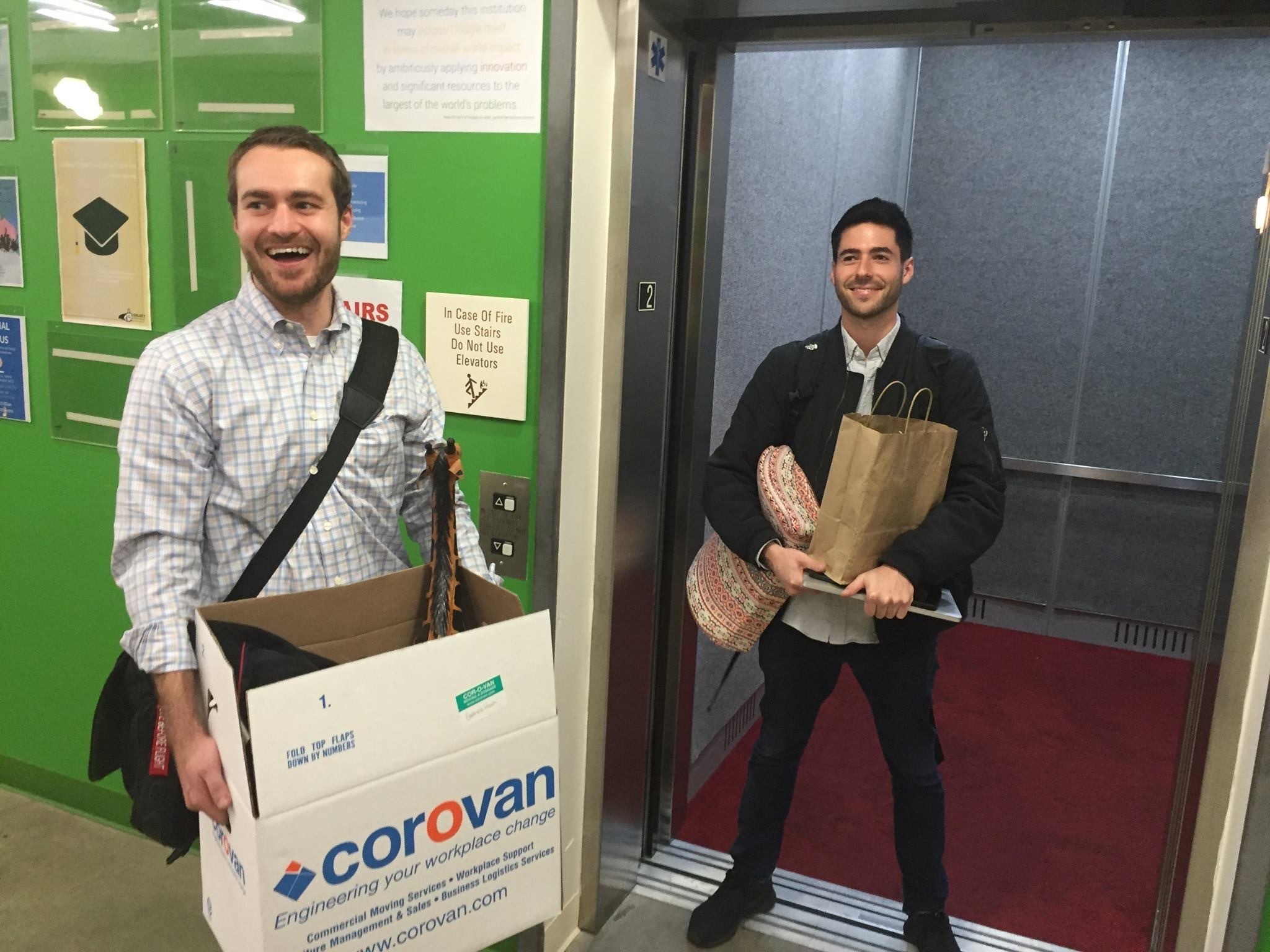
After many sushi dinners, we made the leap. On March 1, 2016, we traded our Google desks for Phil’s couch in SoMa. By then, we had become such regulars at our sushi spot that the head chef, Will, texted us asking where we were. Our Wednesday night ritual at his bar had shifted to takeout containers on a coffee table.
Wilbur Labs was born, not as a polished blueprint, but as a conviction that there was a better way to build companies.
Why Execution Matters More Than Structure
While startup studios felt novel in 2016, the underlying idea was anything but new.
You can trace the DNA of the model back centuries. In the world of art and engineering, the greats like Leonardo da Vinci and Michelangelo brought resources and shared tools under one roof, so apprentices could systematically experiment and create alongside them. In 1876, Thomas Edison modernized the approach with his “Invention Factory,” assembling a team and pooled resources to repeatedly turn inventions into commercial products like the electric light and phonograph. Decades later, Bell Labs operated in a similar fashion, centralizing talent and long-term funding to produce breakthroughs such as the transistor and the laser. No one called these organizations startup studios, but the pattern was there.
By the time we launched Wilbur Labs, the cost of launching a company had decreased dramatically, thanks to the internet and advances in software, and there was renewed interest in the idea of a company starting other companies. There was historical proof that the model could work, but there was no standardization in how to make it work. Ten years later, studios have multiplied globally, and the landscape has diversified dramatically.
One of the biggest lessons we’ve learned is a simple but perhaps controversial truth: There is no inherent alpha in the studio model itself. Studios can’t compensate for weak underlying businesses. The advantage comes from knowing how to execute—and then actually doing it.
Today, studios differ in numerous ways, from how many companies they launch to how deeply they’re involved, how much capital they deploy, and whether they specialize by industry. None of these choices are inherently right or wrong. They need to align with the studio’s actual advantages.
If you have deep expertise in a specific domain, vertical focus makes sense. If you’re a world-class fundraiser with access to massive pools of capital, you can take on capital-intensive bets that others can’t. High-volume models can work, but they risk shifting the game toward probabilities rather than precision and deliberate growth. By throwing a hundred darts at the board, you are more likely to hit a bull’s-eye, but that strategy isn’t sustainable when each dart costs hundreds of thousands, or even millions, of dollars.
Our advice to anyone starting a studio has remained consistent: Design your structure around your unique advantages, and focus more on the success of each individual business than on hypothetical studio-level efficiencies that won’t matter if the portfolio itself isn’t working.
The Wilbur Labs Approach: More Wood Behind Fewer Arrows
From the beginning, our approach diverged from other models. Over time, it crystallized into a few core principles.
First, concentration. A fundamental idea of ours is encapsulated in the phrase “more wood behind fewer arrows.” We build and back a small number of companies by design, committing significant long-term capital and deep operational support to each. This lets us influence outcomes, not just observe them. At any one time, we have only a few companies getting off the ground, allowing us the bandwidth and concentration to focus on each of them and build them one by one.
Second, we’re operators first. We don’t just write checks. We bring a decade of compounded studio knowledge—playbooks, systems, scars—to every company we build. Fundraising helps, but it’s rarely the deciding factor.
Third, we’re industry agnostic. We follow problems, not sectors. If there’s a large pain point, a novel solution we’re uniquely positioned to execute, and a path to building in phases, we’ll pursue it. It doesn’t matter if that opportunity is in travel, jobs, ecommerce, or mobile dog grooming.
Finally, permanent capital. This is the hardest road we chose, and arguably the most important one. We built Wilbur Labs from Phil’s couch rather than raising a traditional fund. In doing so, we could control our time horizons. We don’t have LPs or fund cycles dictating decisions. We can build for decades, without the pressure to rush outcomes. It’s the only reason we can call Wilbur Labs “our last job.”
As we grew Wilbur Labs, some surprises emerged along the way. By front-loading research and compounding learning across companies, we found that we didn’t need ten failures to get one success. We discovered that world-class founders would seek us out when there was a strong fit, because they knew we could compress the time from idea to impact while raising the ceiling on what’s possible. We learned that non-dilutive capital can be a genuine advantage. We offered it instinctively, because we knew our portfolio companies’ economics inside and out. What we didn’t realize was how much that flexibility could influence long-term outcomes—including during the pandemic, when we provided VacationRenter with millions in non-dilutive capital, helping drive a breakout year and more than $1B in gross bookings while others in the industry went out of business.
One thing that hasn’t been a surprise, and which we believe more and more over time, is that our team is the true multiplier. Talent compounds just like knowledge, and I am incredibly grateful to work alongside our world-class studio team, as well as the exceptional teams across each of our portfolio companies. At its core, company building is a people business, and our teams are the foundation of everything we have built so far and everything we will build next.
The Next Ten Years
Looking ahead, we believe that the next decade will be even more consequential for studios. Every phase of company creation—ideation, evaluation, building, scaling—is being reshaped by AI. Research is faster. Prototyping is cheaper. Curiosity costs less.
This is where the Jevons paradox comes into play. As it gets easier to test ideas, the number of experiments will likely increase, not decrease. The risk is a flood of “studio slop”—high-volume, low-substance companies built on autopilot. By the law of numbers, game-changing companies with huge growth potential will inevitably emerge, too. The next decade will bring both new highs and new lows for studios.
That only reinforces our conviction: The world doesn’t need more average businesses. As noise increases, deep, operator-led involvement becomes more valuable, not less. We also believe that studios will increasingly compete with traditional M&A. As the cost to build drops, buyers will focus on acquiring true moats rather than rebuilding what can now be created faster and cheaper.
Building a company is often described as trying to bottle lightning—chaotic and unrepeatable. The goal of the studio model is to turn that chaos into a system. Over the past decade, we’ve built market-leading companies like VacationRenter, Joblist, and Barkbus. We’ve seen companies chart their own course and reach a range of outcomes, from exits and acquisitions to pivots, reinventions, and exponential scaling.
Building something from nothing remains the most beautiful—and fun—thing in the world. Ten years on, it’s never felt like a better time to start companies. We’re looking forward to everything that’s ahead, including sitting down and writing the 50 year look-back when we get there.
Wilbur Labs is a startup studio. We turn bold ideas into market-leading companies.